
Innovation, the Art of Creative Problem Solving

Innovation is not a department. It is a daily habit of mind — and a leadership obligation.
In most organizations, the word 'innovation' is treated as a noun — a thing to be acquired, a department to be staffed, a strategy to be announced. Leaders convene task forces to pursue it. Boards discuss it in planning retreats. It appears in mission statements alongside integrity and excellence and other aspirations that rarely get operationalized.
The leaders I have most respected don't think about Innovation that way. For them, it is not a noun but a verb — a continuous orientation toward the question: Is there a better way? And they carry that question not just into product development or technology, but into every dimension of how they lead.
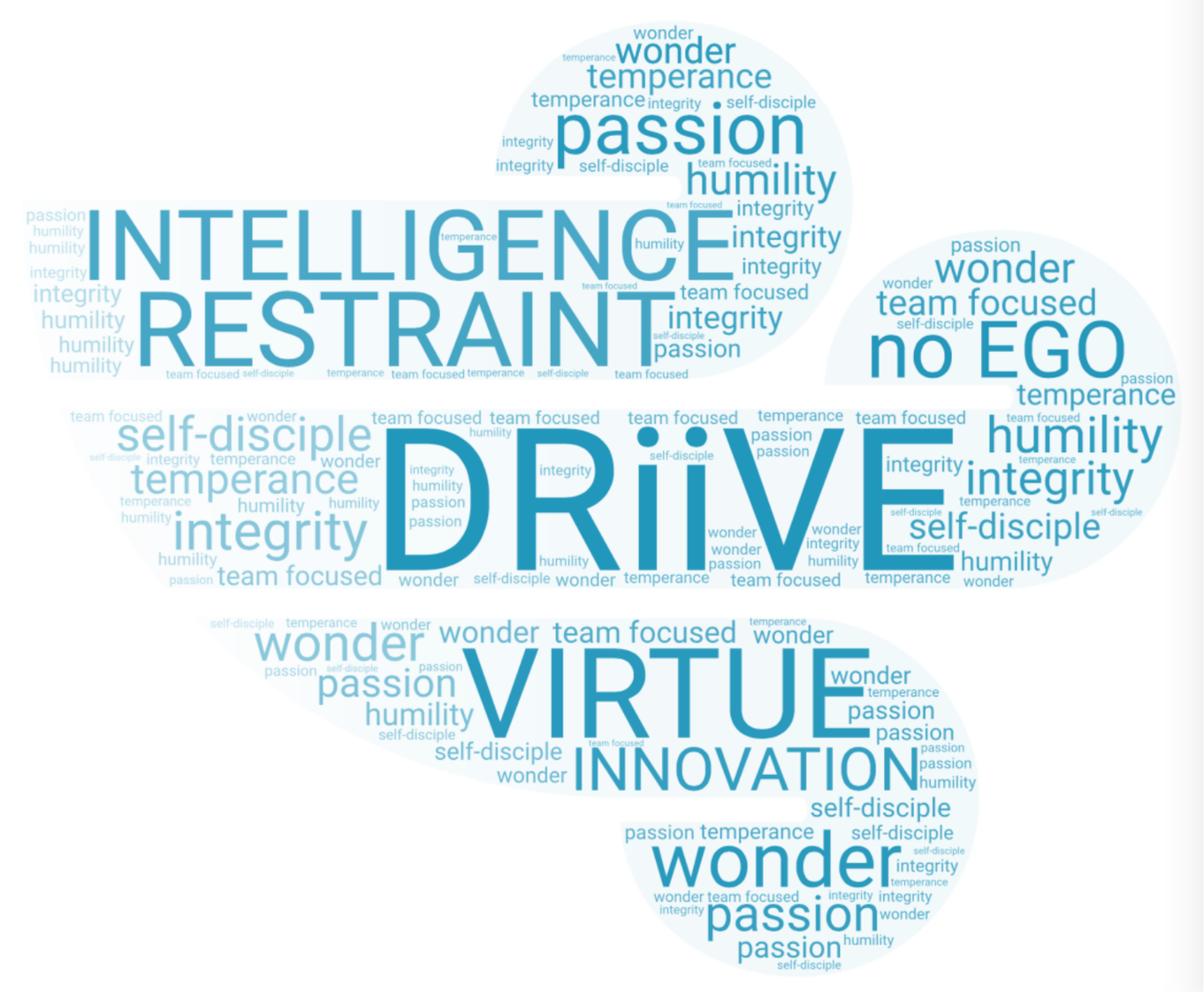
The second i in DRiiVE stands for Innovation. It is the mindset that questions assumptions, refuses to accept obstacles as permanent, and combines creative thinking with practical problem-solving to produce outcomes that no playbook anticipated.
The Messi-Maker Mindset
Here is a truth that most organizations find uncomfortable: real innovation is messy. It requires a willingness to be wrong — publicly, expensively, and in ways that are visible to your team. This is the essence of experimentation. Innovators make messes, sometimes big ones. They pursue breakthroughs without guaranteed outcomes, and they accept the reality that failure is a cost of entry, not a disqualifying event.
So many leaders and organizations default to the opposite posture: risk avoidance, mess prevention, exposure management. The daily behavior of most corporate environments is oriented toward protecting positions and avoiding blame. That is the single most effective way to ensure that nothing genuinely new ever happens.
The innovative leader creates a different kind of culture — one where a new idea is worth testing, where a failed experiment generates learning rather than punishment, and where the search for a better way is understood as a professional obligation rather than an optional extracurricular.
Innovation, Not Duplication
At H-E Parts International, our company tagline — Innovation, Not Duplication — was not a slogan. It was a performance standard. It meant that when a customer came to us with a problem, we were not permitted to hand them back what they already had with a different label. We were in the solutions business. That mandate lived in how we hired, how we measured performance, how we structured our product development process, and how we celebrated success.
Innovation lived in the mission statement, but more importantly, it lived in how we encouraged our people to bring their full creative intelligence to work. It was everybody's job — from the engineers developing new product platforms to the field technicians identifying reliability issues in the field before they became customer complaints. Innovation wasn't a department. It was a daily habit, as natural as showing up.
Innovation Under Constraint
One of the misconceptions about Innovation is that it requires resources, time, and freedom from pressure to produce results. My experience is precisely the opposite: the most creative solutions I have witnessed emerged under conditions of significant constraint. Limited budgets, compressed timelines, post-acquisition complexity — these pressures do not suppress Innovation in the right leaders. They activate it.
When the Manitex team in Italy was tasked with rationalizing twelve crane models down to four while simultaneously expanding margins and launching into new markets, the constraint was the catalyst. The team had to think differently about what the market needed versus what had always been offered. That creative reimagining of the product portfolio — driven by thoughtful, constraint-forced Innovation — became one of the key drivers of two of the operation's strongest years on record.
The Questions That Unlock Innovation
The most reliable way I know to identify an innovative leader is to listen to the questions they ask. The conventional leader asks: Why did this fail? The innovative leader asks: What would have to be true for this to work? The conventional leader asks: How do we prevent this from happening again? The innovative leader asks: What does this tell us about what's possible?
These are not semantic distinctions. They represent fundamentally different orientations toward challenge — and they produce fundamentally different organizational cultures.
An innovation mindset does not require a lab-coat. It can happen in accounting, marketing and customer service. Innovation takes the form of creative solution finding and should happen at every level within the organization. It requires leaders who are creative problem solvers.
Innovation as Leadership Obligation
The world facing business leaders today — accelerating technological change, shifting geopolitical conditions, the ongoing transformation of work — is not a world that rewards those who do things the way they have always been done. The organizations that will create extraordinary value over the next decade will be led by people who approach the future as an invitation rather than a threat.
That is the second i in DRiiVE. Not creativity for its own sake, but the disciplined, purposeful willingness to challenge what is in pursuit of what could be.
Next in this series: V — Virtue. The foundational quality that all the others depend upon.
Learn more about the DRiiVE framework and the GALE Force methodology at jmichaelcoffey.com.
About the Author: J. Michael Coffey is a global M&A executive, author of GALE Force, and a recognized authority on cross-border leadership and organizational culture. Over a career spanning four decades, he has led or advised on approximately 40 transactions across 7 countries. He speaks and consults on leadership, M&A strategy, and executive team development. Learn more at jmichaelcoffey.com.
