
DRiiVE Series: V is for Virtue — The Foundation Securing All Other Leadership Qualities
Integrity is not a soft quality. In leadership, it is the hardest currency of all.
There is a version of this conversation that gets uncomfortable fast — because the moment you introduce virtue into a business context, someone in the room invariably reaches for a disclaimer. It sounds too personal. Too moralistic. Boards hire for competence, not character. Markets reward results, not righteousness.
History has proven these assumptions catastrophically wrong.
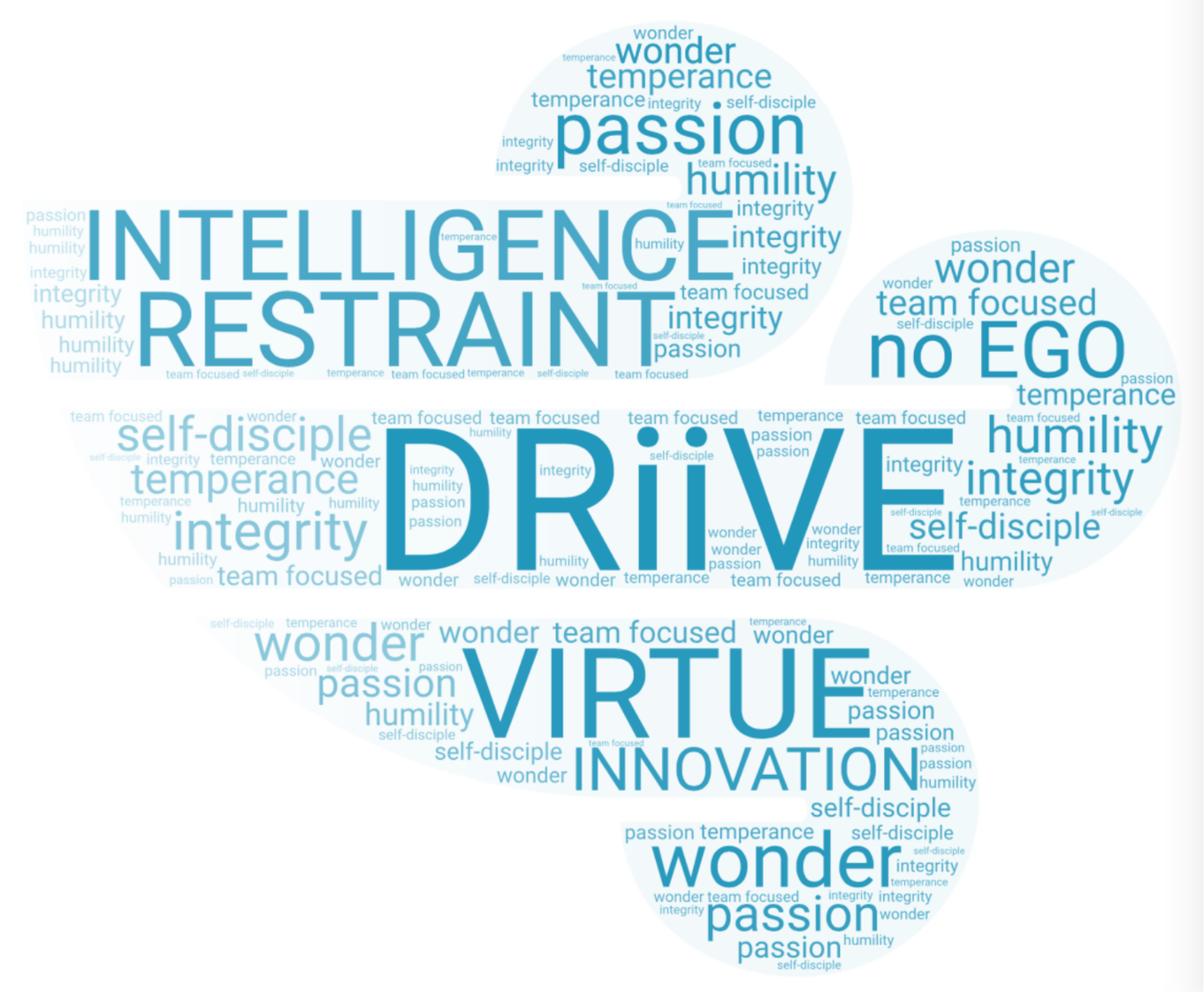
Virtue is the V in DRiiVE — and of all the irreducible qualities I have come to consider essential in a leader, it is the most foundational. Not because it is the most obvious, or the most celebrated, but because every other attribute in this framework ultimately depends upon it. Drive without Virtue is ambition without conscience. Restraint without Virtue is merely calculation. Intelligence without Virtue is cleverness in service of self-interest. Innovation without Virtue is disruption without accountability. Even the team ego that the E represents collapses without Virtue at its center.
What Virtue Actually Means
Virtue, as I mean it in the context of leadership, is integrity in every action. Not selectively — not when it is convenient, not when it is being observed, not when the cost is low — but as a matter of character. It is the leader who does the right thing when doing the wrong thing would be easier, less expensive, and undetected.
It is also humility. The willingness to receive correction, to acknowledge limitation, to share credit generously and carry accountability personally. The humility of a truly virtuous leader is not false modesty — it is the genuine recognition that leadership is a privilege conferred by the people around you, not a right conferred by the organizational chart.
And it is an unwavering commitment to doing what is right — especially, as I have often noted, when it is the hardest thing to do. That specificity matters. Virtue is revealed in the forge. Character reveals itself in moments of friction: when telling the truth is costly, when the right decision is the unpopular one, when the short-term sacrifice is significant and the long-term benefit is uncertain.
Virtue in Transactions
In the world of mergers and acquisitions, Virtue performs a function that no legal document can foster: it generates trust. The most complex and consequential deals I have been part of were not ultimately decided by spreadsheets or term sheets. They were decided by whether the parties trusted each other.
That trust is built over time, through consistent behavior. A leader who is known for telling difficult truths, for honoring commitments even when circumstances change, for dealing transparently even when opacity would be advantageous — that leader enters every negotiation with an asset that cannot be manufactured. Their reputation precedes them, and it opens doors that skill alone cannot.
Conversely, the erosion of Virtue — the small ethical shortcuts, the convenient redefinitions of what was agreed, the self-serving interpretations of ambiguous situations — accumulates a debt that eventually comes due. Often at the worst possible moment, and often with compounding relational interest.
Trust Is the Organizational Infrastructure
Within an organization, Virtue functions as infrastructure. When a leader is genuinely trustworthy — when people know that what they say reflects what they believe, and that what they commit to will be honored — it transforms how the organization operates. Decisions are made with less friction. Problems are surfaced honestly rather than managed upward in sanitized form. Disagreements are resolved through shared principle rather than political maneuvering.
An organization that trusts its leadership is a faster organization, a more resilient one, and a more honest one. These are competitive advantages as real and measurable as any operational metric.
Virtue Cannot Be Installed
I want to return to a point I made in the introduction to this series: DRiiVE is not a training curriculum. These are prerequisites. And Virtue, more than any other quality on this list, simply must be present before the responsibilities of leadership are assigned.
You can train skills. You can develop judgment over time. But you cannot train integrity into someone who does not possess it. And the consequences of placing individuals without integrity in positions of leadership authority — over people, capital, and organizational reputation — are well documented in every era of business history.
When evaluating leaders, look for the evidence of Virtue in the decisions they made when the cost of doing the right thing was real. Ask about the time they disagreed with a superior and said so. Ask about the decision that benefited the organization but not themselves. Ask what they would do differently — and listen for the ones who can answer honestly, without deflection.
Virtue anchors everything. It is the bedrock on which every other element of DRiiVE is built.
Next — and final — in this series: E for Ego. Not the ego you might expect, but the one that builds great organizations.
Learn more about the DRiiVE framework and the GALE Force methodology at jmichaelcoffey.com.
About the Author: J. Michael Coffey is a global M&A executive, author of GALE Force, and a recognized authority on cross-border leadership and organizational culture. Over a career spanning four decades, he has led or advised on approximately 40 transactions across 7 countries. He speaks and consults on leadership, M&A strategy, and executive team development. Learn more at jmichaelcoffey.com.
