
DRiiVE Series: The First i — Intelligence, Where IQ Meets EQ
The smartest person in the room is not always the most intelligent leader in it.
There is a version of intelligence that organizations have long known how to measure and reward: analytical sharpness, technical mastery, processing speed. IQ has been the currency of executive selection for generations — the premise being that cognitive horsepower is what separates the leaders who succeed from those who struggle.
That premise is incomplete. And in the complex, multicultural, high-stakes environments where leadership is truly tested, it can be dangerously misleading.
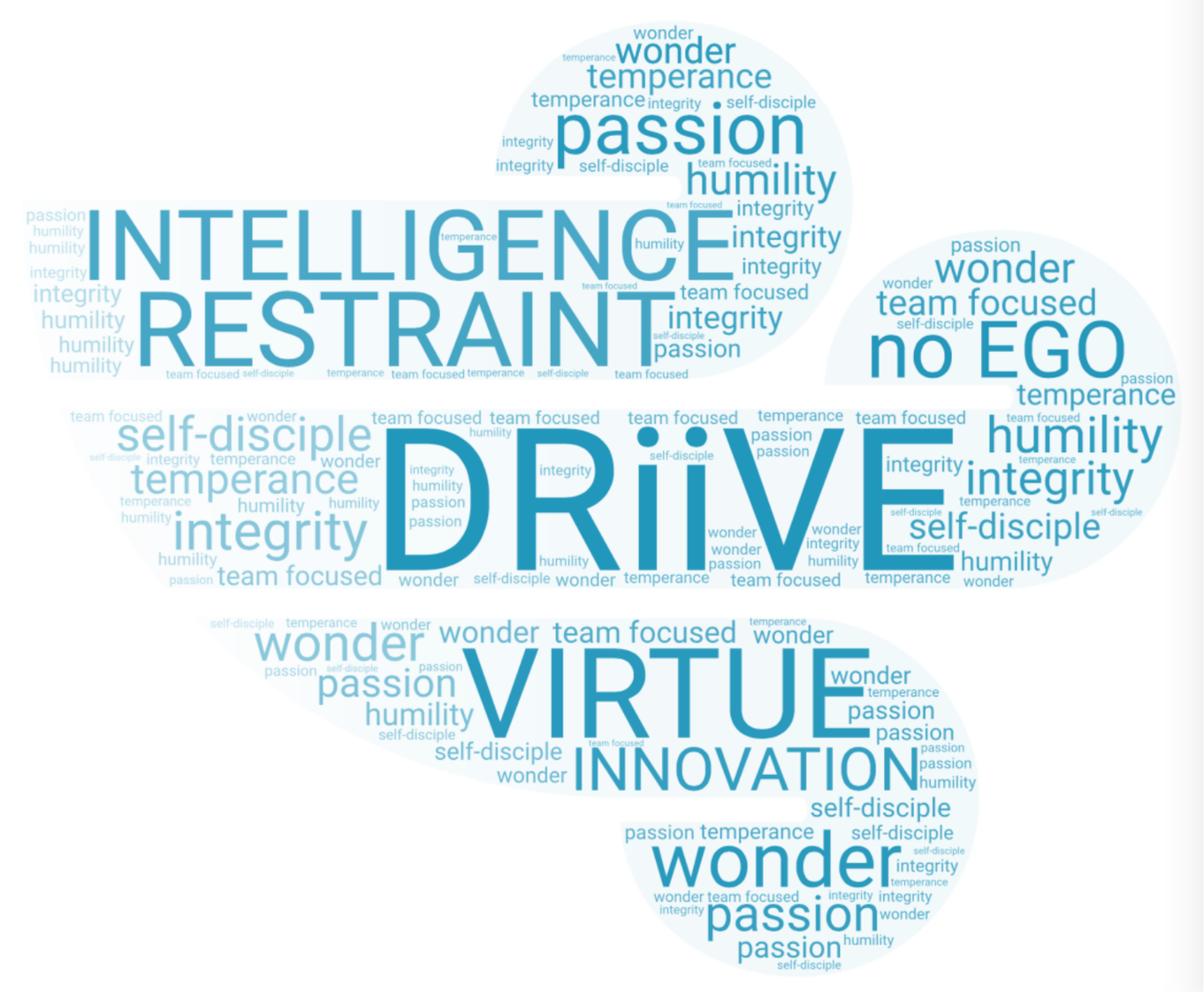
The first i in DRiiVE stands for Intelligence — but the definition for leadership is multidimensional. It encompasses intellectual curiosity and an insatiable drive to learn, yes. But it also encompasses emotional intelligence: the capacity to understand oneself and others, to navigate complexity with empathy, and to move through cultural, generational, and geographic difference without losing the thread of connection that makes leadership possible.
The world is filled with undeveloped leaders, emotionally handicapped and harming their organizations with impetuous responses or unnecessary insecurities. We must seek out a next generation of leader that is both intellectually curious and emotionally well developed. They have high IQ and high EQ.
IQ: The Curiosity Imperative
Let me begin with the intellectual dimension, and specifically the aspect I consider most essential: curiosity. There is a significant difference between a leader who is smart and a leader who is teachable. The smart leader arrives with answers. The teachable leader arrives with questions — and continues asking them long after they've been promoted past the point where asking feels necessary.
In every acquisition I have led or advised, the leaders who drove the most durable value were those who approached the acquired organization as a system worth understanding — not merely a balance sheet to optimize. They studied the competitive landscape with genuine interest. They asked why decisions had been made, not just whether those decisions were right. They were, in the truest sense, learners — and their intellectual openness gave them access to information and insight that more closed-minded leaders never received.
Teachability is not a soft quality. It is a strategic asset. In environments of rapid change, the leader who is willing to update their mental model will consistently outperform the leader who is not.
EQ: The Leadership Multiplier
Emotional intelligence is where intellectual capability is either multiplied or neutralized. A leader with high IQ and low EQ is, in practice, a leader with a ceiling — one that is often reached precisely at the moment of greatest organizational need.
EQ in leadership is the capacity to read the room accurately, to manage one's own emotional state under pressure, and to engage with others in ways that build trust rather than erode it. It is the ability to understand what is not being said — what the hesitation in a colleague's response signals, what the body language in a negotiation room reveals, what the cultural context behind a stakeholder's concern implies.
In cross-border deals, which have defined much of my career, EQ is not optional. I have worked in Italy, Australia, Canada, Chile, and across North America. Each of those environments carried distinct cultural codes around trust, hierarchy, time, and communication. The leaders who thrived in those environments were not the ones who applied a standardized approach and expected it to work universally. They were the ones who listened with genuine attention, adjusted their style without abandoning their substance, and earned credibility not by asserting authority but by demonstrating understanding.
The Synthesis That Makes Leadership
The most capable leaders I have known hold both dimensions of Intelligence in active tension. They are rigorous thinkers who also feel the room. They pursue knowledge relentlessly and communicate with warmth. They can synthesize complex financial and operational information while simultaneously holding space for the human dynamics that will determine whether that information translates into action.
This synthesis is what allows a leader to read the subtle cues in a negotiation — to know when to press and when to pull back, when an agreement is genuine and when it is performative. It is what allows them to navigate the often-fragile dynamics of post-acquisition integration, where the wrong word at the wrong moment can undo months of relationship-building.
Intelligence Is an Orientation, Not a Score
The practical implication for those assessing leadership talent is this: Do not mistake credentialing for Intelligence. The transcript tells you that someone learned; it tells you little about whether they are still learning, or whether they understand the people around them.
Look instead for evidence of intellectual curiosity in action — the track record of someone who sought new information even when they weren't required to, who changed their mind when the evidence warranted it, who asked better questions over time rather than retreating to the comfort of familiar answers. And look for emotional intelligence as a demonstrated behavior, not a personality type — in the relationships they have built, in the teams they have led, in the trust they have earned from people unlike themselves.
Intelligence, as I define it in DRiiVE, is an orientation toward growth and toward people. In a leader, it is one of the most powerful forces for organizational excellence that exists.
Next in this series: the second i in DRiiVE — Innovation. The mindset that transforms obstacles into assets.
Learn more about the DRiiVE framework and the GALE Force methodology at jmichaelcoffey.com.
About the Author: J. Michael Coffey is a global M&A executive, author of GALE Force, and a recognized authority on cross-border leadership and organizational culture. Over a career spanning four decades, he has led or advised on approximately 40 transactions across 7 countries. He speaks and consults on leadership, M&A strategy, and executive team development. Learn more at jmichaelcoffey.com
