
DRiiVE Series: R is for Restraint — The Invisible Hand of Effective Leadership
In a world that celebrates speed, the most powerful leadership move is often the pause.
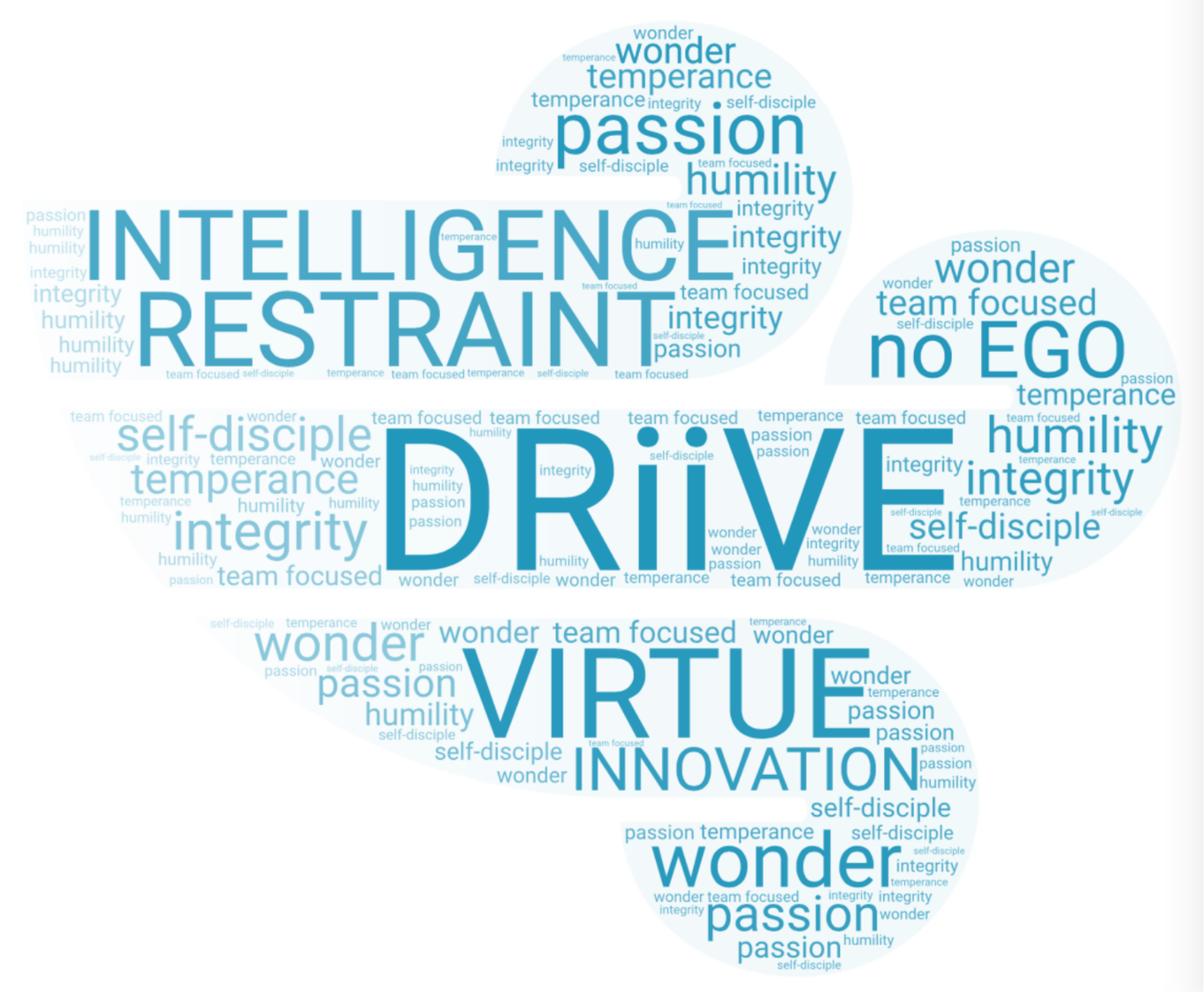
We live in an era that rewards decisiveness — fast pivots, bold moves, and the leader who acts before the competition even recognizes the opportunity. Speed, in many organizational cultures, has been elevated to virtue. And yet some of the most costly leadership failures I have witnessed were not failures of will or ambition. They were failures of restraint.
Restraint is the second quality in the DRiiVE framework, and it is perhaps the most underrated. In an environment where decisiveness is celebrated, the discipline to pause — to evaluate before speaking, to reflect before acting, to absorb before responding — is frequently mistaken for hesitation. It is not. It is the invisible hand of effective leadership, and without it, even the most formidable Drive becomes a liability.
In 2019, I was invited to a dinner with mixed company in Tokyo. In attendance were some internationals on assignment with the Japanese multi-national sponsoring company. An American, in attendance, had his fill of alcohol that evening and he was overstepping his bounds. Frankly, he was making a fool of himself. Although we were not colleagues, I could not help but be embarrassed for him and his sponsor.
Temperance, Revisited
Our grandparents had a word for this attribute, temperance. The quality of moderation and self-control that has been a pillar of sound character throughout recorded history. It was valued not as weakness but as its opposite — as evidence that a person had mastered the most difficult subject of all: themselves.
Restraint in a leader is discipline under pressure. It is the ability to hear difficult news without an immediate reactive response. It is the capacity to sit in ambiguity without forcing a premature resolution. It is timing over impulse, precision rather than reaction. In short, it is the quality that makes a leader's voice worth listening to — because when they do speak, what they say has been weighed.
Restraint in Deal-Making
In the world of mergers and acquisitions, where great sums of capital and hard-won reputations are simultaneously on the line, Restraint is not an abstract virtue. It is a practical necessity.
I have been in negotiations where a single poorly timed reaction — a flash of frustration, an overconfident projection, a word spoken before its moment had arrived — shifted the entire dynamic of the table. Deals that should have closed didn't. Partnerships that began with goodwill ended in litigation. The proximate cause was often not strategy or structure. It was a leader who failed to hold the pause.
Conversely, I have watched gifted leaders command a room through stillness. Their restraint was not passive — it was active and deliberate. They allowed others to speak, absorbed the full picture, and responded with precision that earned trust rather than anxiety. In complex transactions involving multiple cultures, languages, and stakeholder interests, that kind of measured leadership is the difference between a deal that creates value and one that destroys it.
Restraint Is Marinated in Time
There is a phrase I have returned to often: Restraint is marinated in wisdom's best friend — time. It is a developing or seasoning process. The leader with Restraint has accumulated enough experience, and extracted enough learning from it, to know the difference between a decision that must be made immediately and one that deserves more consideration. They are rarely surprised by the costs of haste, because they have paid those costs before and refused to pay them again.
This is why Restraint, like the other qualities in DRiiVE, cannot truly be manufactured by a training program. It can be modeled, encouraged, and reinforced — but it ultimately lives in a person’s character. A leader either has the internal architecture for it or they don't.
Restraint and the Organization
The impact of a leader's Restraint — or its absence — is not limited to the individual. It cascades. When a leader reacts without reflection, the organization learns that reaction is the norm. Teams become defensive and can hedge information rather than remain transparent. Information flows get filtered as people learn to manage the messenger rather than the message. The entire information architecture of the organization degrades.
By contrast, leaders who model Restraint create cultures of psychological safety. When people know that a problem, honestly surfaced, will be met with calm deliberation rather than immediate escalation, they surface problems earlier. And early problems are solvable ones.
Assessing Restraint in Leaders
When evaluating leadership candidates — whether in a hiring process or an acquisition — the questions that reveal Restraint are rarely the ones on a prepared list. Watch how they handle disagreement in real time. Notice whether they ask clarifying questions before defending a position. Observe their behavior when they receive information that challenges their existing view. Are they composed, genuinely curious? These responses signal the qualities of a self-discipled leader.
Drive without Restraint is a runaway engine. Sometimes the best deal you do, is the deal you don’t do. Drive, coupled with Restrain offer an internal tension at the heart of any great leader.
Learn more about the DRiiVE framework and the GALE Force methodology at jmichaelcoffey.com.
About the Author: J. Michael Coffey is a global M&A executive, author of GALE Force, and a recognized authority on cross-border leadership and organizational culture. Over a career spanning three decades, he has led or advised on approximately 40 transactions across 7 countries. He speaks and consults on leadership, M&A strategy, and executive team development. Learn more at jmichaelcoffey.com.
